Feb 4 ,
2026
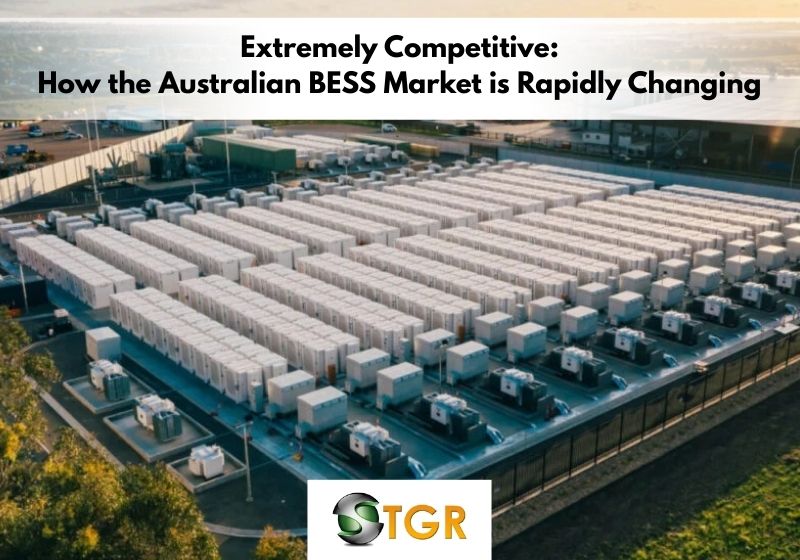
Extremely Competitive: How the Australian BESS Market Is Rapidly Changing
Australia’s Battery Energy Storage System (BESS) market has entered a new phase, one
defined by speed, scale, and intense competition. What was once a niche segment of the
energy industry has quickly evolved into one of the most dynamic and contested spaces in the
country’s clean energy transition.
From grid-scale batteries to commercial and community storage projects, competition is
reshaping how battery projects are planned, priced, and delivered.
Why the BESS Market Is Heating Up
Australia’s energy system is undergoing a structural shift. As renewable generation increases, particularly large-scale solar and wind, the need for storage has become unavoidable. Batteries are now essential for balancing supply and demand, managing peak loads, and stabilising the grid. This growing reliance on storage has attracted:- New developers entering the market
- Global battery manufacturers expanding into Australia
- Investors seeking stable, long-term infrastructure returns
More Projects, Tighter Timelines
One of the biggest changes in the Australian BESS market is the volume of projects moving through development stages simultaneously. Planning approvals, grid connection studies, and procurement processes are happening at a much faster pace than in previous years. With multiple battery projects often competing for the same grid connection points, developers are under pressure to:- Secure land and approvals early
- Optimise system design for performance and compliance
- Deliver projects on tighter construction schedules
Technology Is Advancing, Expectations Are Rising
Rather than offering a one-off incentive, the program is structured to evolve. As battery technology matures, expectations around performance, lifespan, and safety have increased. Grid operators and offtake partners are demanding systems that can deliver consistent output, fast response times, and long-term reliability. This has raised the bar for:- Battery chemistry selection
- System integration and control software
- Fire safety and compliance standards
Commercial and Industrial Demand Is Growing
Competition isn’t limited to grid-scale projects. The commercial and industrial (C&I) BESS market is also expanding rapidly. Businesses are turning to batteries to manage energy costs, reduce peak demand charges, and improve operational resilience. As more providers enter this space, customers have more choice but also face more complexity. This is pushing installers and solution providers to differentiate themselves through expertise, transparency, and tailored system design.Policy and Market Signals Are Shaping Competition
Government policies, market mechanisms, and grid rules are playing a major role in how competitive the BESS market has become. Incentives, capacity markets, and network constraints are influencing where and how battery projects are developed. Developers who understand these signals and can adapt quickly are gaining an edge. Those who don’t risk delays, reduced returns, or missed opportunities.What This Means for the Industry
The rapid growth and competition in Australia’s BESS market signal a sector moving into maturity. While this creates challenges, it also drives innovation, cost efficiency, and higher standards across the board. For the industry, competition is:- Improving project quality
- Accelerating delivery timelines
- Encouraging smarter system design
- Pushing the market toward long-term sustainability
Our Perspective at Think and Grow Renewable
At Think and Grow Renewable, we see the competitiveness of the BESS market as a positive sign. It reflects confidence in battery storage as a core component of Australia’s energy future. However, success in this environment requires more than ambition. It requires technical expertise, strong planning, and a clear understanding of how storage fits into the wider energy ecosystem. As competition increases, experience and execution will be the true differentiators.Looking Ahead
Australia’s BESS market will continue to evolve rapidly. As more projects come online and competition intensifies, the focus will shift from simply building batteries to maximising their value for the grid, for businesses, and for communities. One thing is clear: battery storage is no longer a supporting player. It is now at the centre of Australia’s energy transformation.Blog Sidebar
Search
Recent Articles