

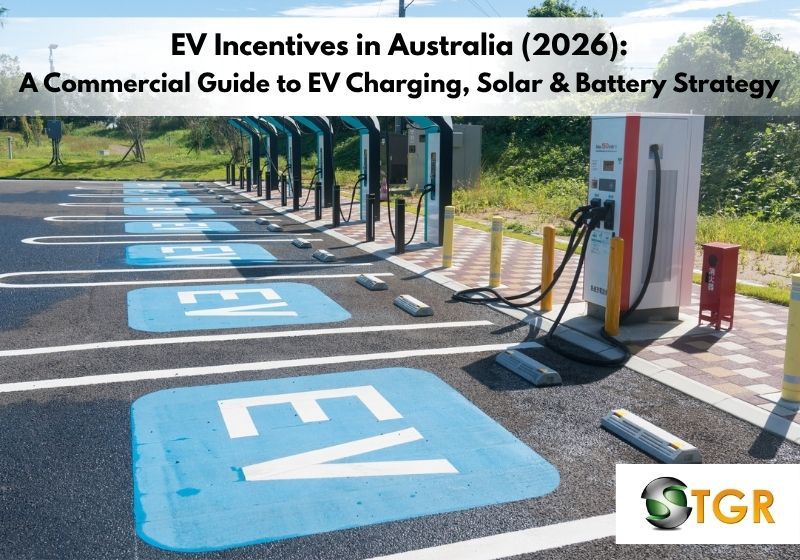
EV Incentives in Australia (2026): A Commercial Guide to EV Charging, Solar & Battery Strategy
Australia’s electric vehicle transition is no longer just about early
adopters, it’s now a business infrastructure decision.
For commercial property owners, fleet operators, and developers, the
conversation has shifted from “Are EVs worth it?”to “How do we build
scalable EV charging backed by solar and battery systems?”
In 2026, incentives still exist but the real opportunity lies in strategic
integration, operational savings, and long-term ROI.
EV Adoption Is Driving Infrastructure Demand
As EV adoption grows across Australia, businesses are under increasing pressure to provide:- Workplace EV charging
- Fleet charging solutions
- Customer-facing charging stations
- Commercial buildings
- Shopping centres
- Warehouses and logistics hubs
- Hospitality and mixed-use developments
What this means:
EV charging is quickly becoming a value-added asset, not just a utility.Understanding EV Incentives for Businesses in 2026
The structure of EV incentives has evolved. Instead of relying heavily on upfront rebates, businesses now benefit from a mix of: 1. Tax Advantages & Depreciation Benefits Electric vehicles and charging infrastructure can offer favourable tax treatment, including accelerated depreciation in certain cases. Impact:- Reduces effective capital cost
- Improves project feasibility
- Encourages bulk EV adoption
- Creates demand for depot-based charging systems
- Commercial EV charging stations
- Public-private charging infrastructure
- Regional charging networks
- Reduces upfront investment risk
- Encourages early adoption
Why EV Charging Alone Is Not Enough
One of the biggest mistakes businesses make is installing EV chargers without an energy strategy. Grid-powered EV charging can:- Increase electricity bills significantly
- Trigger peak demand charges
- Put pressure on existing electrical infrastructure
The Role of Solar in EV Charging
Pairing EV chargers with a commercial solar system allows businesses to:- Generate their own clean energy
- Offset daytime charging costs
- Improve sustainability credentials
Battery Storage: The Missing Link
Battery storage transforms a basic EV charging setup into a high-efficiency energy system. With batteries, businesses can:- Store excess solar energy for later use
- Charge EVs during peak demand periods without high grid costs
- Stabilise energy usage across the day
The Real ROI: Beyond Incentives
In today’s market, the strongest returns don’t come from incentives alone, they come from smart system design. Revenue & Savings Opportunities:- Reduced electricity costs through solar generation
- Lower peak demand charges with battery storage
- Monetisation of EV charging (pay-per-use or subscription models)
- Increased customer footfall and dwell time
- Higher property value and tenant attraction
Commercial Use Cases That Are Growing Fast
1. Retail & Shopping Centres- Attract EV-driving customers
- Increase time spent on-site
- Offer employee charging as a benefit
- Support ESG and sustainability goals
- Electrify delivery fleets
- Reduce long-term fuel costs
- Differentiate with premium EV amenities
- Appeal to eco-conscious travellers
Planning the Right EV + Solar + Battery Setup
Before investing, businesses should evaluate:- Energy consumption patterns
- Available roof space for solar
- Peak demand charges
- Future EV demand (scalability)
- Grid connection capacity
Future Outlook: Where the Market Is Heading
The next phase of commercial energy in Australia will be driven by:- Integrated energy systems (EV + Solar + Battery)
- Smart energy management and load balancing
- Decentralised power generation
- Electrified transport ecosystems
- Cost advantages
- Brand positioning
- Infrastructure readiness
- EV incentives still exist but are no longer the primary driver
- Commercial EV charging demand is rising rapidly
- Solar reduces charging costs significantly
- Battery storage improves efficiency and ROI
- Integrated systems deliver the best long-term value