Nov 19 ,
2026
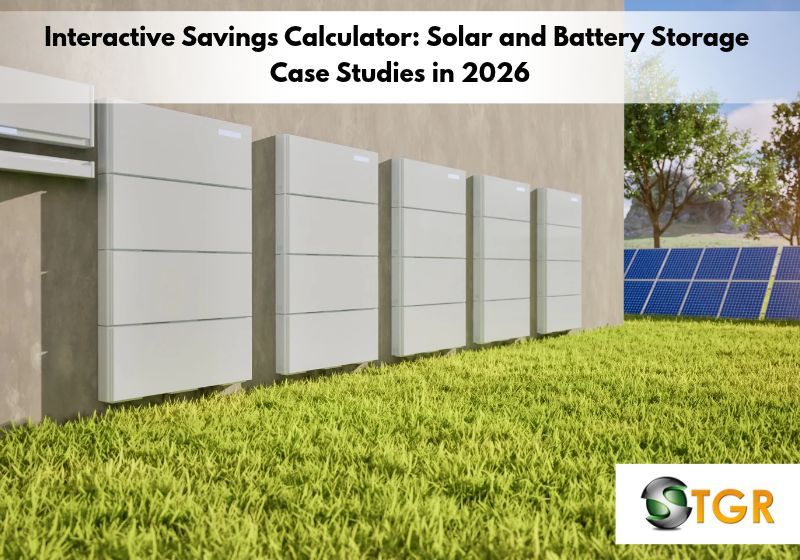
Interactive Savings Calculator: Solar and Battery Storage Case Studies in 2026
Introduction
In 2026, solar power and battery storage are becoming key solutions for improving energy efficiency and reducing electricity costs. But how much can households and businesses actually save? An interactive solar and battery savings calculator helps estimate potential bill reductions, annual savings, and payback periods. Combined with practical case studies, it helps homeowners and businesses make informed decisions about renewable energy investments.What Is an Interactive Solar and Battery Savings Calculator?
An interactive solar and battery savings calculator is a tool that estimates the potential financial benefits of installing solar panels, battery storage, or a combination of both. Users enter information about their electricity consumption and proposed energy system to understand how their costs could change. Unlike a general savings estimate, a well-designed calculator can compare different system sizes, installation costs, and usage scenarios. This allows users to explore how changing their energy habits or adding battery storage may influence the overall financial outcome. For example, a homeowner may compare the expected savings from installing solar panels alone with the savings from installing solar panels alongside a battery. Similarly, a business can assess whether a larger solar system could help meet its daytime electricity demand. The results are estimates rather than guarantees, but they provide a useful starting point for evaluating renewable energy investments.How Does a Solar and Battery Savings Calculator Work?
A calculator uses several inputs to estimate the potential performance and financial value of an energy system. The quality of the result depends on the accuracy of the information provided. 1. Current Electricity Consumption : The first step is understanding how much electricity a property uses and how much it costs. Electricity bills provide useful information about monthly expenses and consumption patterns. For businesses, it is also important to identify when electricity is used. A commercial property that consumes most of its electricity during daylight hours may be able to use a larger share of its solar generation directly. 2. Solar System Size : Solar system capacity influences how much electricity can potentially be generated. The appropriate system size depends on energy consumption, available roof space, local solar conditions, and installation requirements. A calculator can help compare different system sizes, but the largest system is not necessarily the most cost-effective. The aim is to select a system that suits the property's energy needs and financial objectives. 3. Battery Storage Capacity : Battery storage allows excess solar electricity to be stored for later use. Instead of exporting all unused solar generation to the grid, a property may store some of that electricity and use it during the evening or other periods when solar generation is low. The potential benefit depends on the amount of excess solar electricity available, the property's energy demand, battery efficiency, and the difference between electricity import and export prices. 4. Installation and Operating Costs : The initial investment includes equipment and installation expenses. Depending on the project, ongoing maintenance, monitoring, inverter replacement, and battery replacement may also affect long-term costs. Including relevant expenses provides a more realistic estimate of the financial return. 5. Electricity Tariffs : Electricity prices play a major role in calculating savings. If electricity purchased from the grid costs significantly more than the payment received for exported solar electricity, using solar generation on-site may offer greater financial value. Time-of-use tariffs can make the calculation more complex because electricity prices may vary throughout the day. A suitable calculator should account for these differences wherever reliable tariff information is available.Why Solar and Battery Storage Matter in 2026
The renewable energy sector continues to evolve as electricity demand, energy security, and the need for flexible power systems influence investment decisions. According to the International Energy Agency (IEA), global battery storage deployment reached approximately 108 GW of new capacity in 2025, around 40% higher than in 2024. This growth highlights the expanding role of battery storage in modern electricity systems. For households and businesses, solar panels can generate electricity during daylight hours, while batteries can help shift some of that energy to periods when it is needed. This combination can improve the use of renewable electricity and provide greater flexibility in managing energy costs. However, financial benefits differ between properties. Solar generation, consumption patterns, electricity tariffs, installation expenses, and available incentives all influence the final outcome.Case Study 1: Estimating Savings for a Residential Property
Consider a household with an annual electricity bill of $3,000. The homeowner is considering installing a rooftop solar system to reduce the amount of electricity purchased from the grid. For this example, assume that the solar installation reduces the household's annual electricity costs by 25%. Illustrative calculation :| Description | Estimated amount |
|---|---|
| Annual electricity bill before solar | $3,000 |
| Assumed reduction in electricity costs | 25% |
| Estimated annual savings | $750 |
| Estimated annual bill after solar | $2,250 |
Case Study 2: Comparing Solar-Only and Solar-Plus-Battery Systems
Solar panels and battery storage serve different but complementary purposes. Solar panels generate electricity, while a battery stores some of the surplus energy for later use. Consider a household or business that generates more solar electricity during the day than it immediately consumes. Without a battery, surplus electricity may be exported to the grid, depending on the property's system configuration and applicable arrangements. With battery storage, some of that excess electricity can be stored and used later, potentially reducing grid electricity purchases during the evening. A calculator can compare two scenarios: Scenario A: Solar panels only- The property generates renewable electricity during daylight hours.
- Electricity used directly on-site can reduce grid purchases.
- Surplus electricity may be exported to the grid.
- Electricity may still need to be purchased when solar generation is insufficient.
- The property uses solar electricity directly when it is generated.
- Some excess solar electricity is stored in the battery.
- Stored electricity can be used later, subject to battery capacity and efficiency.
- Grid electricity purchases may decrease during certain periods.
Understanding the Solar Payback Period
The payback period estimates how long it takes for the financial savings from an installation to recover its initial cost. A basic calculation is: Simple payback period = Initial system cost ÷ Estimated annual net savings For example, if a solar installation costs $6,000 and generates estimated annual net savings of $1,500, the simple payback period would be four years. This is an illustrative calculation. Actual payback may be longer or shorter depending on installation costs, energy prices, system performance, and ongoing expenses. Simple payback calculations also have limitations. They do not fully account for changing electricity prices, financing costs, equipment degradation, maintenance, or the time value of money. Battery systems may require additional analysis because their financial performance depends on how frequently stored electricity is used and the value of the electricity displaced. For a more complete evaluation, property owners should compare estimated savings over the system's expected operating life and include relevant costs.Five Factors That Can Change Your Energy Savings
1. Daily Energy Usage : The timing of electricity consumption matters as much as total consumption. Properties that use more electricity while solar panels are generating may benefit from using a greater share of their solar power directly. 2. System Design and Performance : Solar panel orientation, shading, available installation space, equipment selection, and local weather conditions can affect generation. A system should be designed around the property's requirements rather than relying only on a general calculator estimate. 3. Electricity Prices and Export Payments : Changes in electricity tariffs can influence the value of solar generation. A calculator should use relevant tariff information and distinguish between electricity purchased from the grid and electricity exported to it. 4. Battery Capacity and Efficiency : A battery that is too small may not store enough energy to meet later demand, while an oversized battery may add unnecessary upfront costs. Battery efficiency and operating conditions also influence how much stored energy is ultimately available for use. 5. Installation, Maintenance, and Replacement Costs : The initial price is only one part of the investment. Maintenance, monitoring, financing, and potential component replacement should be considered when estimating long-term savings. Taking these factors into account helps produce a more realistic financial assessment.How Businesses Can Use Savings Calculators for Energy Planning
For commercial properties, a savings calculator can be a useful first step in a broader energy assessment. Businesses can use estimated results to compare potential system sizes, assess the financial implications of battery storage, and identify projects that may warrant further investigation. A practical evaluation may include:- Reviewing electricity bills and consumption data.
- Identifying daytime and evening energy demand.
- Comparing solar-only and solar-plus-battery options.
- Estimating upfront costs and potential annual savings.
- Assessing the simple payback period and longer-term financial performance.
- Reviewing technical requirements and installation feasibility.
How TGR Supports Renewable Energy Decisions
Think & Grow Renewable (TGR) provides energy solutions for residential and commercial properties, including solar installations, energy management, energy audits and monitoring, feasibility studies, solar asset management, and other renewable energy services. For property owners considering solar or battery storage, understanding energy consumption and project requirements is an important part of selecting a suitable solution. An energy assessment can help establish the property's needs, identify relevant technical considerations, and evaluate potential opportunities for improved energy efficiency. Combining consumption data with appropriate project analysis can provide a stronger basis for investment decisions than relying on generic savings estimates alone. To explore renewable energy and energy management services, visit Think & Grow Renewable.Frequently Asked Questions
1. What is a solar and battery savings calculator? It is a tool that estimates potential electricity bill reductions, annual savings and investment payback periods using information such as energy consumption, system size, installation costs and electricity tariffs. 2. Are solar savings calculator results accurate? Calculator results are estimates based on the information entered and the assumptions used. Actual savings can vary because of weather, energy consumption, electricity prices, system performance, and other factors. A professional assessment can provide a more tailored estimate. 3. Does adding a battery always increase savings? No. A battery can help store excess solar electricity for later use, but it also increases the initial investment. Its financial value depends on consumption patterns, electricity tariffs, battery costs and how effectively stored electricity is used. 4. How is the solar payback period calculated? A simple payback estimate divides the initial system cost by the estimated annual net savings. This provides a basic indication of how long it may take to recover the investment, but it does not capture every long-term cost or financial factor. 5. Can businesses benefit from solar savings calculators? Yes. Businesses can use calculators to compare system options, estimate potential electricity cost reductions, and identify projects that may warrant a detailed feasibility study. Accurate consumption and tariff data are important for meaningful results. 6. What information is needed to estimate solar savings? Useful inputs include electricity bills, energy consumption, proposed solar capacity, installation costs, electricity tariffs, and, where applicable, battery capacity and usage assumptions.Blog Sidebar
Search
Recent Articles